Oaxaca by way of walls
On buses :
March 15th, 7am: I take a motion sickness pill in a bus station in Puerto Escondido.
March 15th, 8pm: I wake up in La Ciudad de Oaxaca.
"Write the story of a contemporary cured of his heartbreaks solely by long contemplation of a landscape." - Camus, Notebooks. The only thing I learned in my long travel through the landscape was that motion sickness pills make you very drowsy. Maybe I need to try it again.
In any case, I made it to Oaxaca, officially 'starting' my Chandler year.
On My Labyrinth:
On my first day in the city I remarked that it feels like an ancient city, lost in time, stuck in a bottle and preserved. I blame this on the city's love for huge stone walls, cobbled roads, and abundance of colonial era churches. The Cantera Verde, light green volcanic tuff, is used in huge cubes to form walls and makes every building look like a patinated castle.
In the cafes the men sing Elvis on acoustic guitars to remind you large parts of the historical center are reserved for American pensioners. and me.
I've been having some problems with dissociating recently - maybe it's the anachronistic, out of time, element of the city, the lack of real purpose of any tether for myself here, or the fact that my brain is always lagging a few seconds behind as it finishes translating the previous sentences. One moment I'm here, one moment I'm there, one moment I'm watching a quesadilla fry on the street, the next moment I am the quesadilla, frying under the mid-day Mexican sun, the quesillo of my brain melting away.
But I think this is all a natural reaction. Maybe it's part of what I'm here to learn about, part of the 'pray' section of my eat, pray, love holy trinity. Balancing the future with the present, knowing where you came from and where you're going, the journey and the destination. That, or since I lost my sunglasses, everywhere I walk is a flash of stop-motion moments where I'm either squinting into the impossibly omnipresent sun or looking at the cobbled ground. I am the horse jogging around the spinning image cylinder, but not fast enough to appear lifelike. More tests needed.
I see but I don't want to be perceived, for fear of being taken as a tourist, which I am, so I act as if I don't need to see, to imply I already know, which I don't.
I'm currently reading Octavio Paz's Labyrinth of Solitude and have been thinking a bit about the title. He argues that humans are unique because we are the only species to know we are alone, and life is about the navigation of one's loneliness and the eternal search for companionship. Or maybe not, I haven't finished the book... In any case, I have felt these past few weeks like I'm in a bit of a maze, and it's reassuring to know one of the most famous Mexican authors felt the same way. Theseus was able to navigate the labyrinth in Crete by using a ball of thread to mark his path, slaying the Minotaur. I'm note sure what my minotaur is, or if it's actually solitude as Paz suggests, but I think my job this year is to find my own ball of thread to help me navigate the maze.
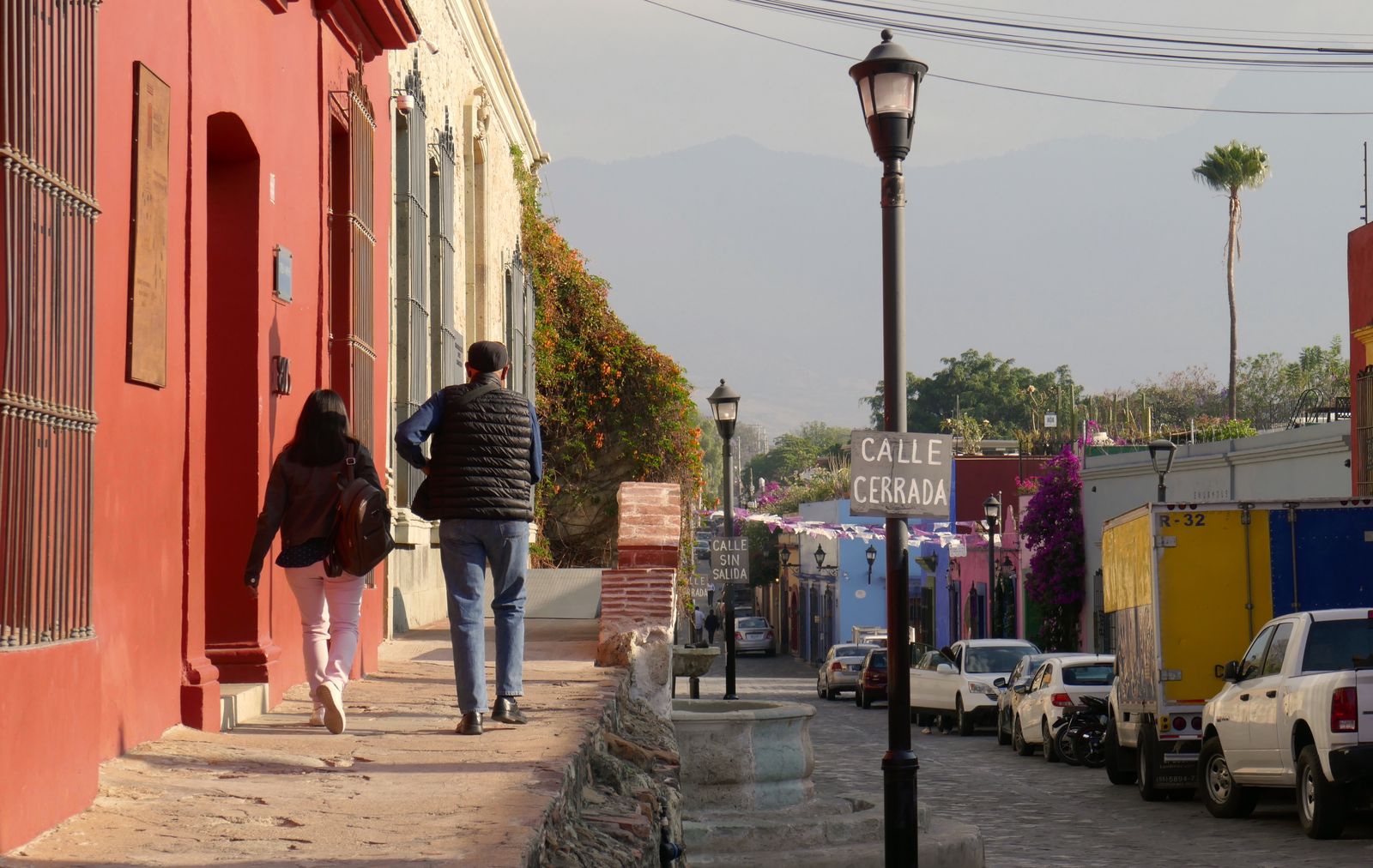
Calle Sin Salida - Road without an Exit
On Free Juices and Surprise Holidays:
On my second day here I learned about the holiday of Samaritana - a holiday more or less unique to (the center of) Oaxaca, celebrating the story of a good samaritan who gave Jesus water when he was thirsty. On Samaritana stores and houses hand out homemade agua frescas on the streets, in their doorways, through open windows, or near public fountains. Agua fresca is a drink made from fruit, grains, or flowers mixed with sugar and water. It's sold by street vendors, restaurants have different flavors daily, and they're a great way to rehydrate from all the heat.
I indulged in this holiday to its fullest extent and drank six different aguas frescas: horchata with honeydew melon, strawberry horchata, tamarind (which I learned was a sour seed), jamaica (which I learned was the hibiscus), pineapple, jamaica with pineapple, lime, chilacayote (which I learned was a pumpkin, my personal favorite). There were probably a lot more that I missed like guava, passion fruit, and cherimoya but one's bladder is only so big.
It felt a little bit like halloween without the costumes and candy, with and a spring more wholesomeness. The community getting together to share the fruits of their vines for a day reminded me of the Mexican idiom:
"Arrieros somos, y en el camino andamos"
We're all mule drivers and on the road we walk.
I'm not religious, or catholic, but it was a very love thy neighbor day. I think I will always remember the uniqueness of the holiday, the way it took me by surprise, the collective kindness of everyone, the temporary sense of community across all borders, and the unending satisfaction of free juices.
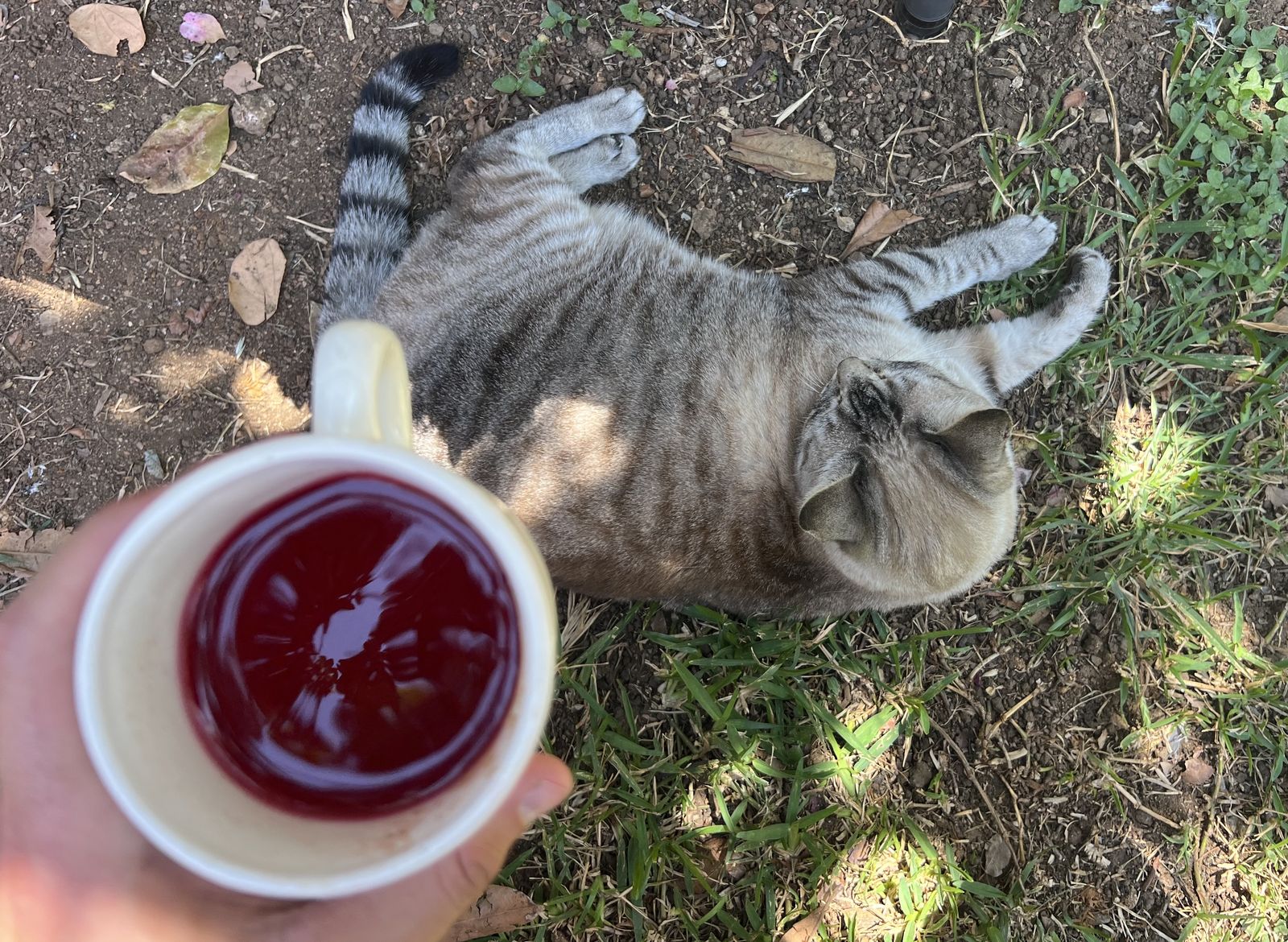
Drinking Juice with a local on Samaritana
On Friends:
I've been told many times over that in order to navigate Mexico as a gringo, one must have have the help of Mexican friends. They get you into places, they get you out of places, show you what to eat, tell you the things there are no signs for, and, crucially, teach you how to use public transportation.
On my first weekend in Oaxaca I was blessed with two new Oaxacan friends, Fatima and Osvaldo. They are both students at one of the universities here studying to become teachers. We met at an intercambio (language exchange) program at the Oaxaca Lending Library and we went out for lunch afterwards, where we chatted about language, culture, and ourselves. They showed me the
-
Casa Cultural de San Pablo: an ex-convent, art gallery, library, archeological site, coffee shop fusion
-
Los Arquitos de Xochimilco: an antique Spanish aqueduct where the arches are now used as entrances to houses, with the doors painted bright colors
-
Jalatlaco: a trendy neighborhood with some nice coffee shops, not as exciting as the other two...
-
The Supermarket: quite a letdown for the purpose of buying groceries, but Osvaldo was able to find food disinfectant for me, a very important tool to eat produce here
The next day, to really secure the burgeoning friendship, I went on a run up the Cerro del Fortín with Osvaldo.
Since those busy two days of city exploring and friendship-building they've since taken me to the feria de tacos (taco fair), Monte Alban (archeological site), and introduced me to some of their friends.
Through a different intercambio program I met Bulmaro, a teacher a few years older than me, learning English so he can switch jobs. Intercambios are very loose in their format, and to me it's just a fancy word for chit-chat session. On our first chit-chat session, Bulmaro and I bonded over the topic of books, both sharing the same favorite book: The Grapes of Wrath / Las Ubas de la ira. We spent our first few sessions chatting about literature, food, mezcal, markets, and Mexican politics. Every day after teaching his classes, Bulmaro studies English in the library by either reading or talking with anyone who's willing to chat. Multiple times I've walked in on him reading, page by page, word by word, the English-Spanish dictionary. On the weekends, he takes home English-Spanish children's books to practice more. His dedication to improving his already impressive English is infectious and he's been a great friend, study-partner, and guide to have.
I'm calling both of these new friendships good progress in the love portion of my trinity.
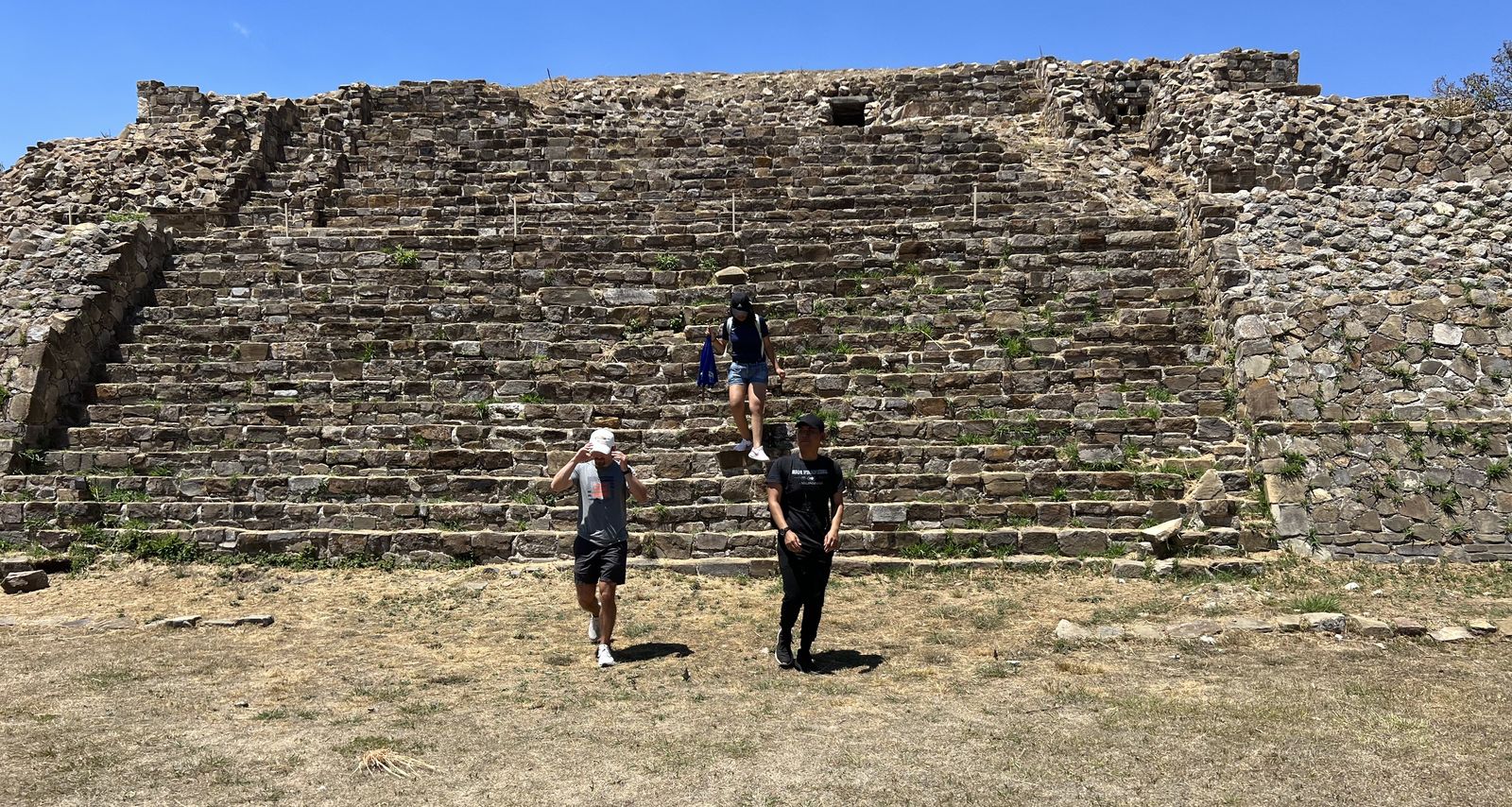
The gang at the North Platform of Monte Alban, as pictured by a stranger
On Food for Thought:
I vacillate between feeling that the core of my purpose here is to either (a) think critically about food or (b) think critically about the world through food as a lens. I've been doing a lot more of (b) recently, by using food as the fuel for my thoughts. Which is to say I'm making excuses. But right now, for me, existing and navigating has carried enough learning to feel like I'm on the right path.
In any case, I have had some thoughts on food, so I'll do my civic duty and share those.
Monte Alban is an archeological site which was once the center of power for various indigenous groups such as the Olmecs, Zapotecs, and Mixtecs. It existed with different levels of regional importance for over 1,500 years. There are tombs, temples, ball courts, dams, and lots more you could read about from a more knowledgable source. Like most monuments, it was lived in by the elite and nobility, and the rest of the population lived in the periphery, maybe venturing to the temples at Monte Alban for special occasions. In any case, it's atop a very large hill, but it's a walkable distance from Oaxaca's city center, meaning people still make the walk today. It's not as common, because taxis and busses exist, but you can do it. People thousands of years ago made this walk, and on a sunny morning in March I did as well.
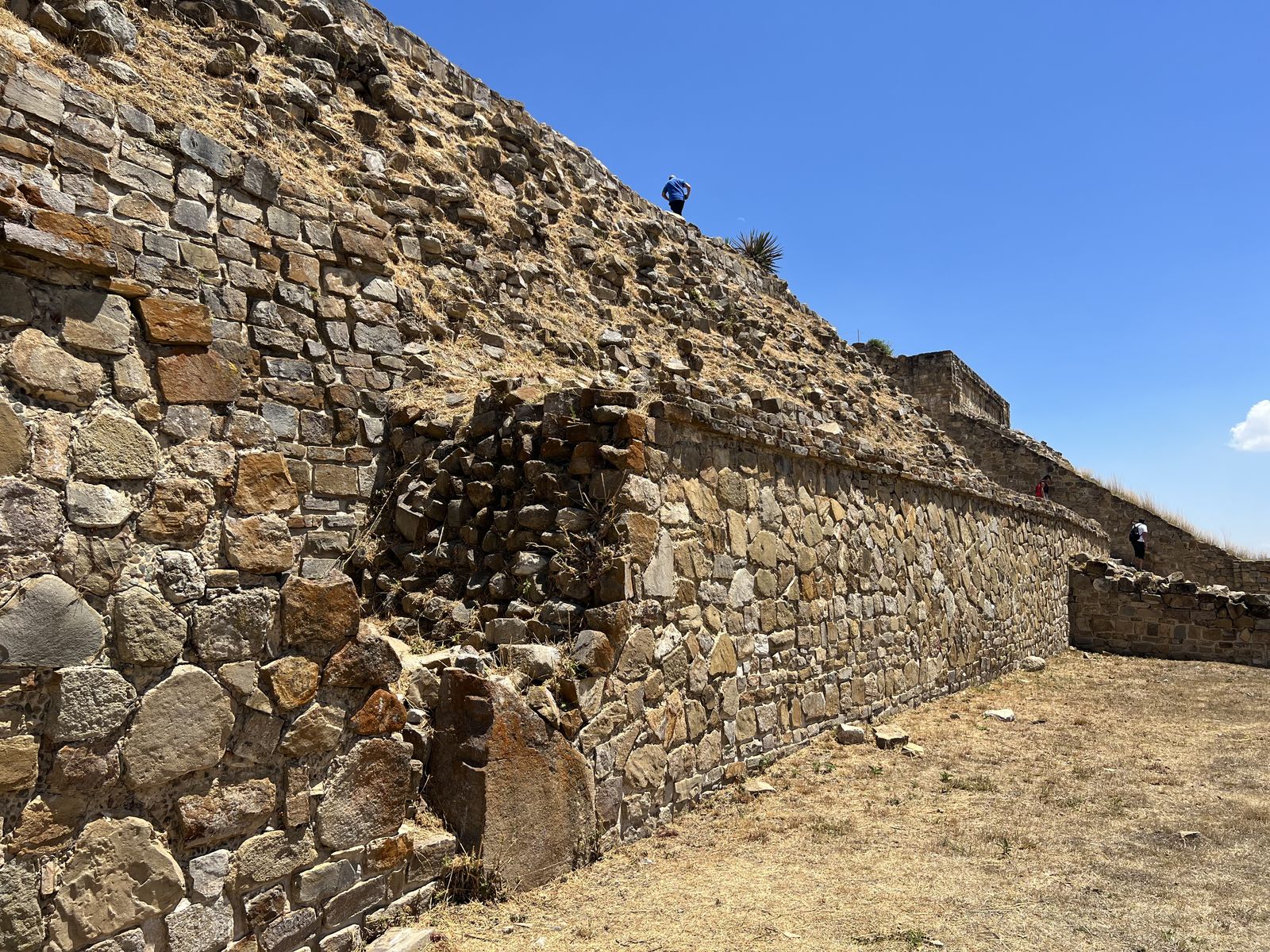
Thick walls, thin walls, tall walls, short walls, slanty walls, flat walls, broken walls.
I went with Fatima and Osvaldo and we climbed the stone steps of the temple platforms, touched glyphs of dancers and captives, and stood where different groups have stood for over a millennium. I once spent a few weeks in Ireland studying how their stone walls are built, have changed over time, and vary from town to town. Which is to say I've got a thing for stone walls, and Monte Alban is brimming with them. To me there's something very human about stone walls and their ability to tell a story moored to the time they were created. To add a new stone is to fix a new story. A functional marker of culture, care, effort, history, fear, tradition, toil, creativity, sweat, and life. It's my personal version of Whitman's O Me! O Life!: "That you are here, that life exists and identity, that the powerful play goes on and you may contribute a verse." Every stone wall was someone's contribution to the powerful play and I'm the lucky sap who, though never intended, gets to witness it. Weird, I know, but everyone has their vices, let me live with mine.
Food is not all that different except that the markers of history are less visible, because they usually get eaten or drank.
The evening of the Monte Alban excursion I went to an ancestral drink event which included mezcal, pulque, and hydromiel (mead). I chatted with the the creators of the events, the vendors at their the different stands, and got a few contacts. A band started playing once the sun went down and the atmosphere was alive and connected. Music, people happy, the power and persistence of mezcal - the same activity that has been happening here since people were living at Monte Alban. It was a special feeling to be in the middle of it all and, for a brief moment, to be a part of the cross-cultural conversation that has been happening here for thousands of years.
Seamus Heaney relates stone walls to growth rings on a tree, with each layer showing persistence of culture and the commonality of past and present. I like to think that food has the possibility to do this, and it's the reason I find fermentation interesting. One would have to squint to see the growth rings on French Fries, whereas, with something like Mezcal, the process of creation is not all that different than how it was made during the time of Monte Alban. The growth rings are more apparent, the connection to the past is stronger felt, and as a result it acts as a vehicle for culture preservation.
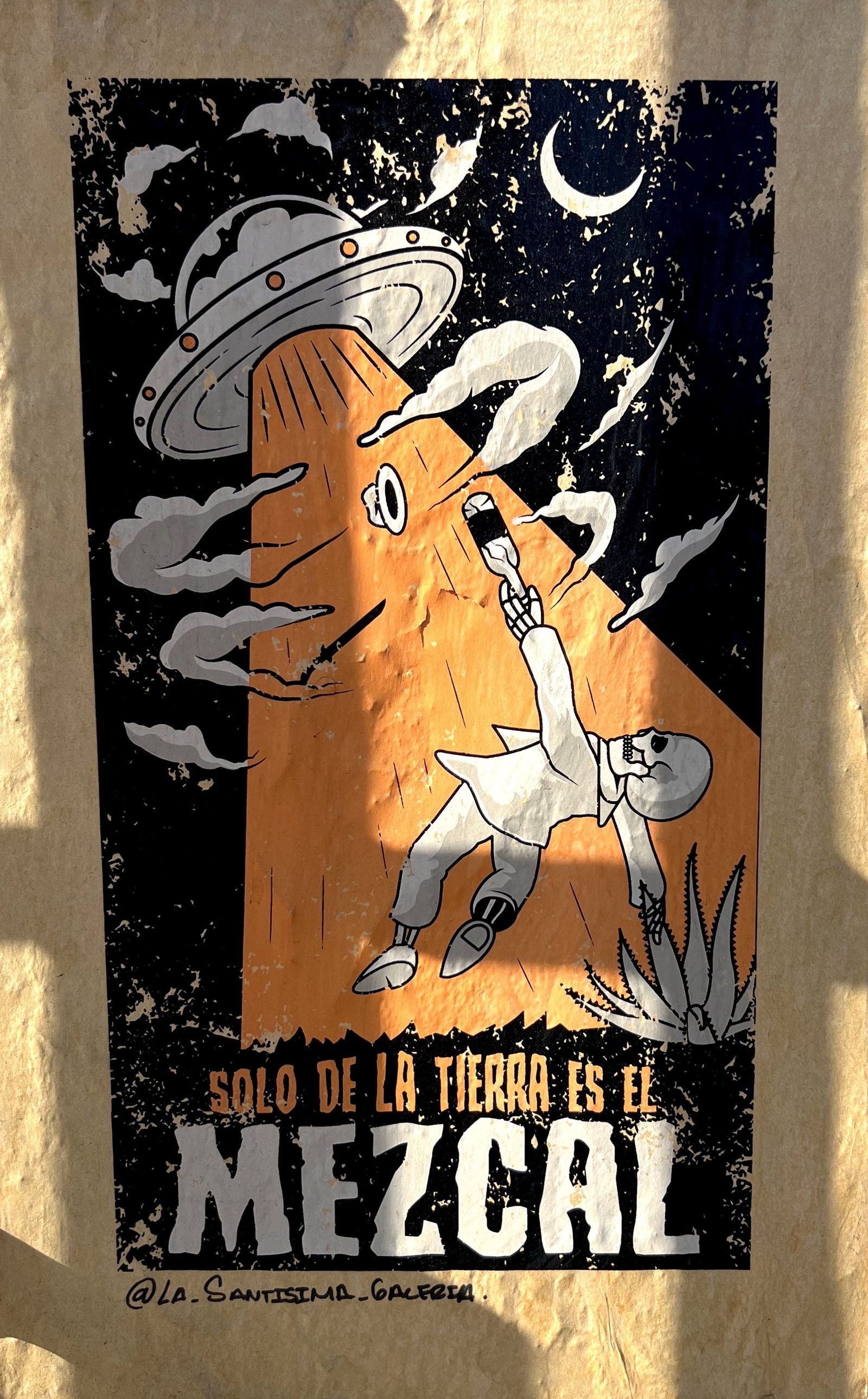
Only from the Earth is mezcal
On Foods I Ate:
March 17th: I was walking the streets looking for food, as I always am, and found tacos de res con consomé, 5 for $65. Excuse my poor translation, but they amount to stewed beef tacos, similar to birria. They were maybe the best tacos I had ever eaten up to that point - tied with the spicy shrimp tacos from Mike's Taco Club in San Diego. Plus, eating on the street, butt on pavement, adds a level of atmosphere which is hard to match. An open air concept yet to be fully captured elsewhere.
March 18th: I tried enfrijoladas (tortillas in a bean sauce) and atole de champurrado (a warm corn drink with chocolate), both were good but not life changing. I think the texture of atole needs to be acquired.
March 20th: I wrote in my journal, "eating after classes and it's another instance of indecision causing me stress. Took me 30 minutes to find food. In this city! I was chasing the perfect vibe, and it was the enemy of the good (me). I was happy with where I ended up, but at what cost.
There's times to be picky, and other to take what you can get and not get upset - I should have taken what I could have gotten, but instead I ended up upset."
March 21st: "a day well fed and well felt. Not one of many, somehow. Getting there." Tried elote for the first time (boiled then grilled corn with mayonnaise, chili powder, and crumbled cojita cheese) and had a Tlyauda with cecina enchilada: a massive corn tortilla, grilled with a special pork lard sauce called asiento, beans, vegetables, avocado, quesillo (Oaxacan string cheese), and a slice of meat. This is the street food staple of Oaxaca and I've eaten one nearly every other day.
March 22nd: "I went on a hunt for snacks, but was absolutely crushed. Only potato chips, cookies, and cereal. Not sure what I usually snack on, but I ended up with two bananas and peanuts."
March 23rd: Every day after class I would go to the same restaurant for lunch, which served comida corrida (food on the run). I like to translate it, very loosely, to fast food, though it doesn't share any similarities other than name and speed of preparation. A drink, a soup, and an entree, all for 60 pesos. The menu is fixed with 2-3 options that change every day, which was a fun way to try a wide variety of local dishes and it also saved me from indecision anxiety.
March 27th: "Saturday at the Taco Fair I tried tripe, which looked like bacon (didn't taste like it), escabeche (a mix of tripe and beef), and carnitas (braised pork). Carnitas had so much potential but let me down a little bit. Fatima was a saint and did the ordering for me. Tried my first nieve (ice cream without milk) of mango and passionfruit with chili coated gummy worms (gusanitos enchilados). I love all the fairs: tejate and sausage next week, ice cream the week after."
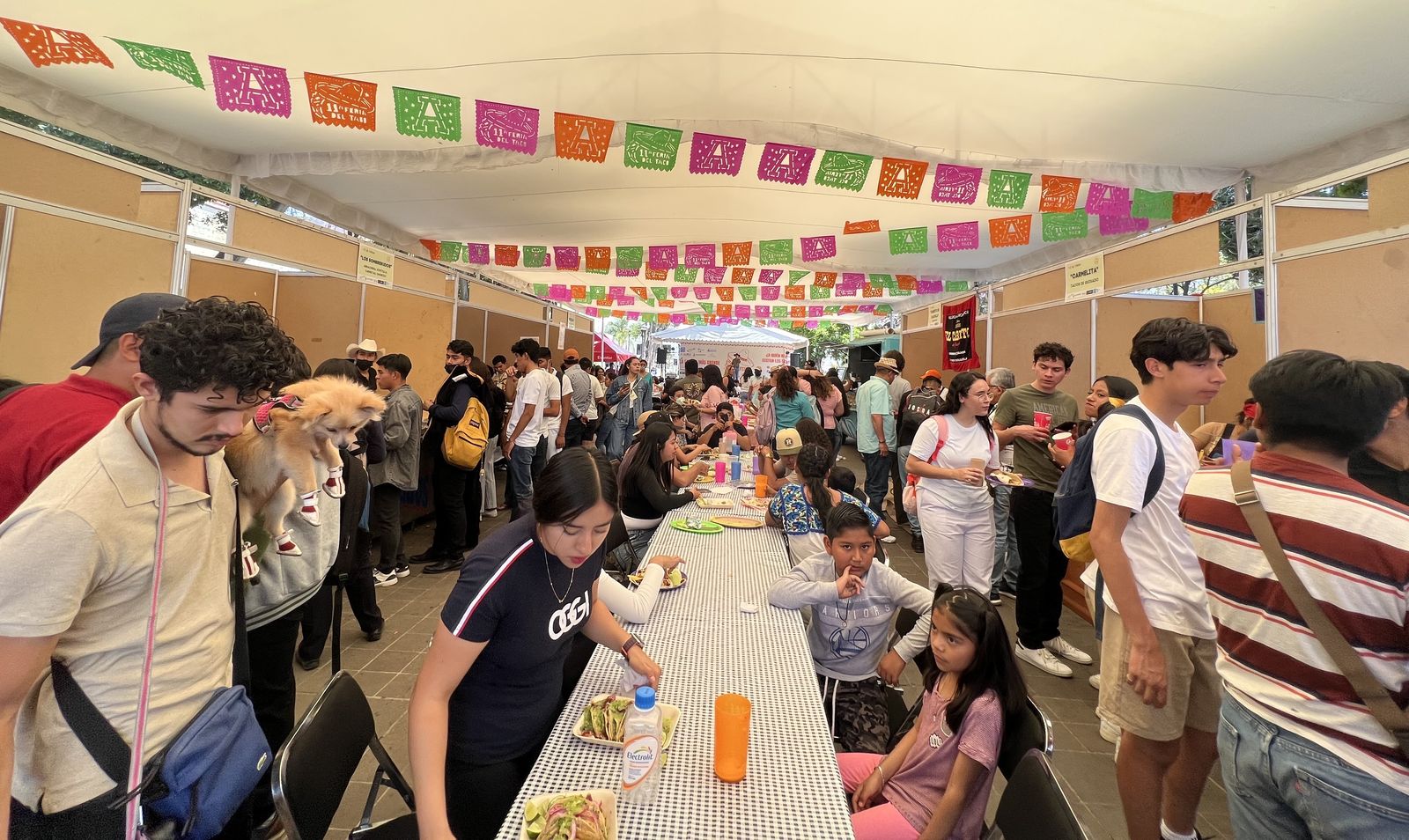
Taco Fair!
An Excuse
It's been hard to summarize two weeks of activities, and as you can see by the date I'm posting this, I'm falling a bit behind already. I think it may be more sustainable for me to only cover 10 days at a time. We'll see.
Thanks for reading EatMarshallEat! Subscribe for free to receive new posts and support my work.
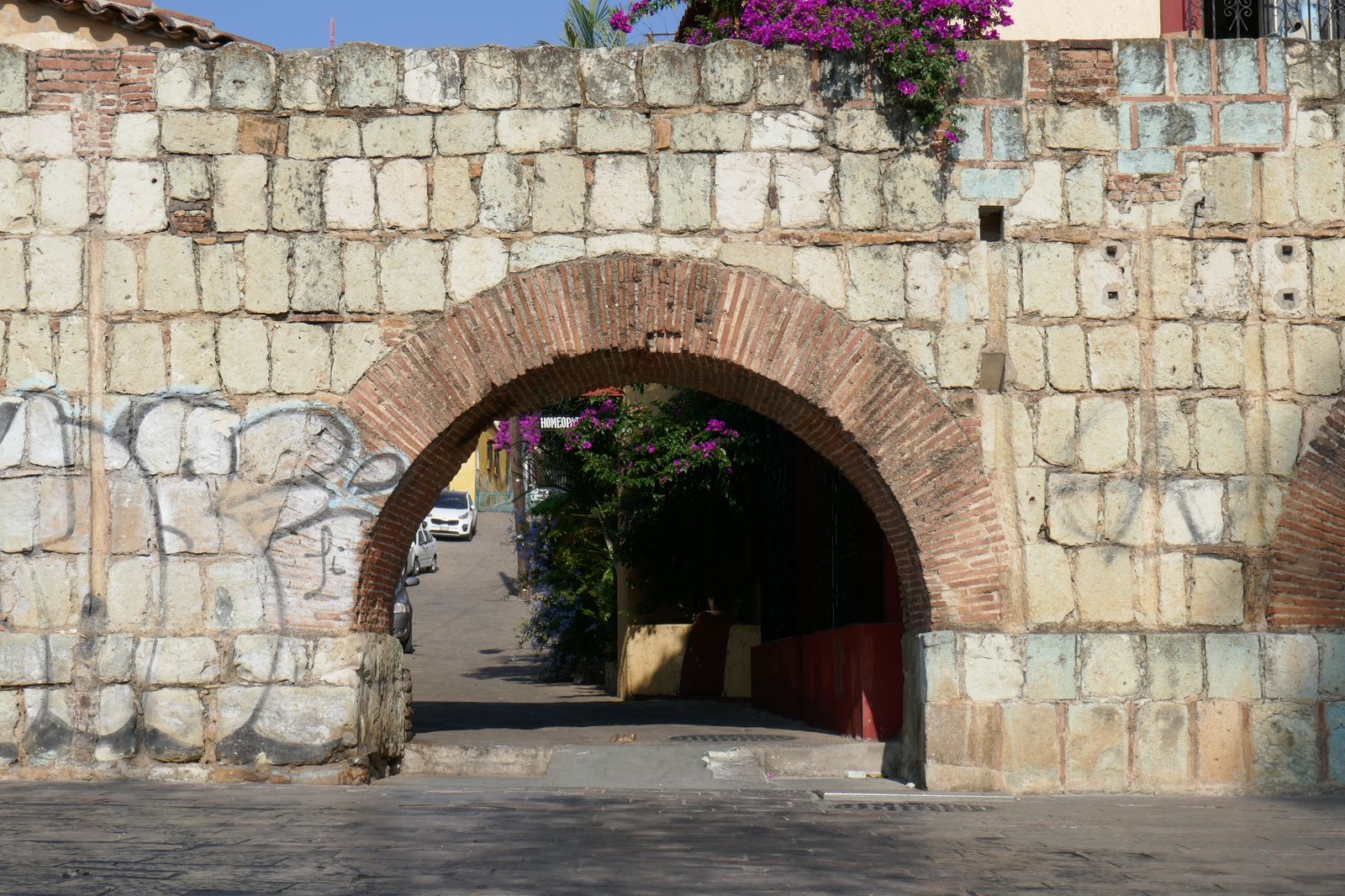
Stone wall with useful holes in it - Spanish aqueduct in repose
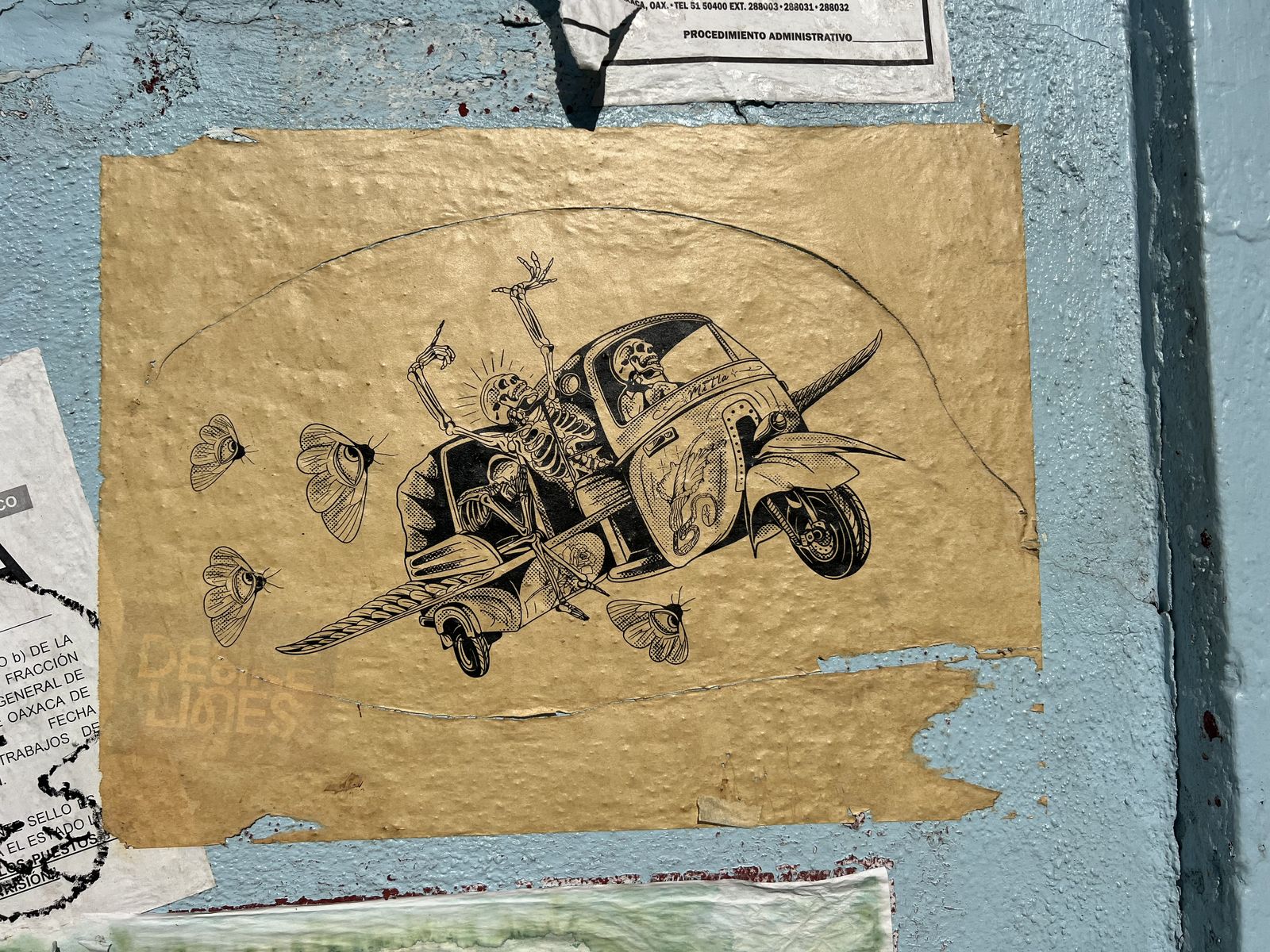
Not sure the meaning of this one, but I liked it
Thanks for reading EatMarshallEat! Subscribe for free to receive new posts and support my work.